Do you wake up with jaw tension, headaches or the feeling that you have been clenching your teeth during the night?
Many people clench or grind their teeth without even realising it. Bruxism can occur while sleeping and even during the day, progressively affecting the teeth, muscles and temporomandibular joint.
Over time, this overload can lead to dental wear, cracks, fractures, tooth sensitivity, gum recession, facial tension or jaw discomfort that can affect both oral health and the aesthetics of the smile.
At Clínica Áureo, in Palma de Mallorca, we carry out a personalised diagnosis of bruxism through clinical assessment and digital study, helping us detect signs of wear and design the most suitable treatment for each patient.
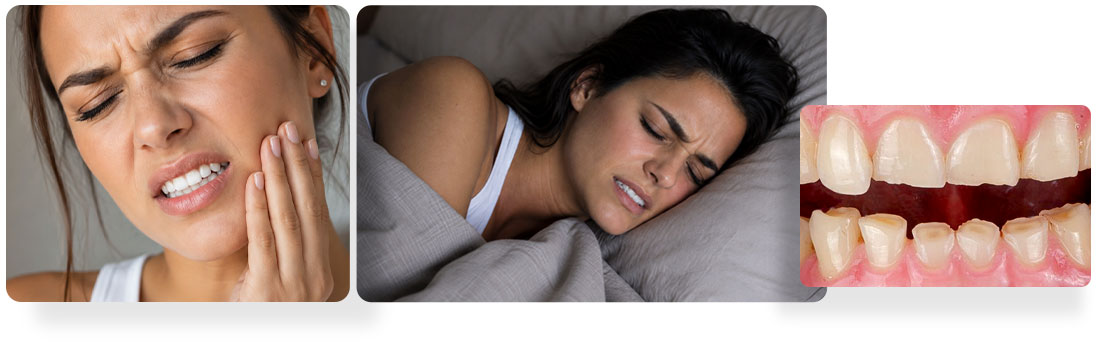
Bruxism is a functional disorder that causes patients to clench or grind their teeth involuntarily.
Although many people associate it only with sleep, bruxism can also occur during the day, especially in situations of stress, tension or prolonged concentration.
The repetitive pressure generated by the jaw muscles can progressively affect:
In many cases, patients are not aware of the problem until symptoms or visible signs of dental wear begin to appear.
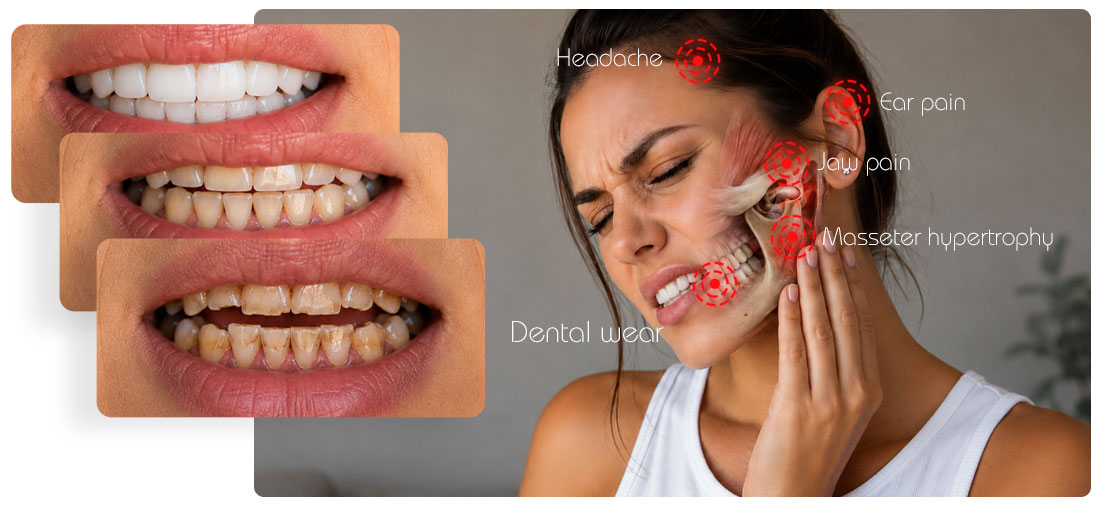
Bruxism can manifest itself in many different ways depending on the patient and the degree of severity.
Some of the most common symptoms include:
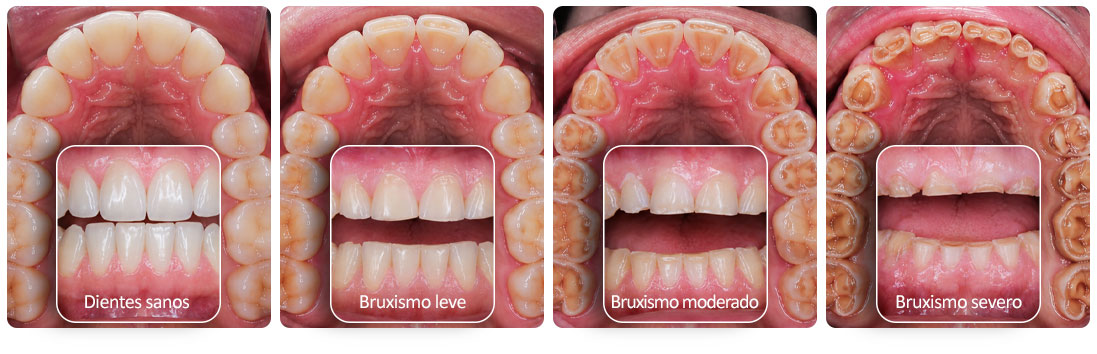 When bruxism continues over time, dental wear can progress and affect both the function and aesthetics of the smile.
Continuous pressure on the teeth can:
In some patients, dental wear becomes severe and may require more complex restorative treatments to recover the anatomy and functionality of the teeth.
For this reason, detecting bruxism early is essential to prevent more serious damage.
At Clínica Áureo, we perform a personalised study to analyse bruxism, bite and dental wear in each patient.
During the assessment, we evaluate:
In addition, we use digital study and 3D intraoral scanning to obtain a more precise analysis of the bite and dental wear.
This allows us to design fully customised splints adapted to each patient.
Michigan splints are one of the most commonly used treatments to protect teeth and the temporomandibular joint against wear caused by bruxism.
These are rigid and fully customised splints, usually made from high-resistance rigid acrylic resin. Their flat design and thickness of approximately 2 to 3 mm help prevent dental interferences and promote better muscle relaxation.
The splint is usually placed on the upper arch, covering all or part of the teeth depending on the needs of each patient.
Its function is to modify and soften the contact between both arches, redistributing bite forces, reducing muscle overload and decreasing pressure on the temporomandibular joint (TMJ).
In addition to being used for bruxism and dental wear treatment, Michigan splints may also be indicated in certain cases to help improve jaw positioning or bite-related joint problems.
Each splint is individually designed based on a personalised study and adjusted in consultation to achieve a comfortable, stable and functional fit.
Not all splints are the same. Proper diagnosis, design and adjustment are essential for the treatment to be effective and comfortable.
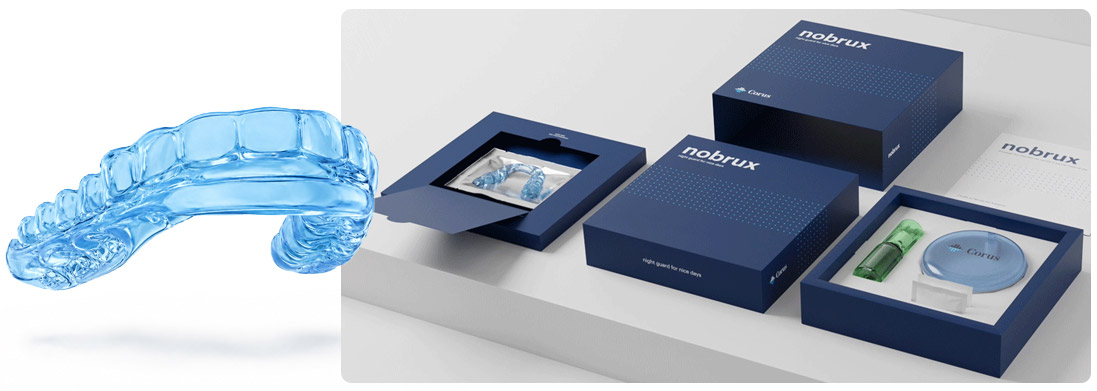
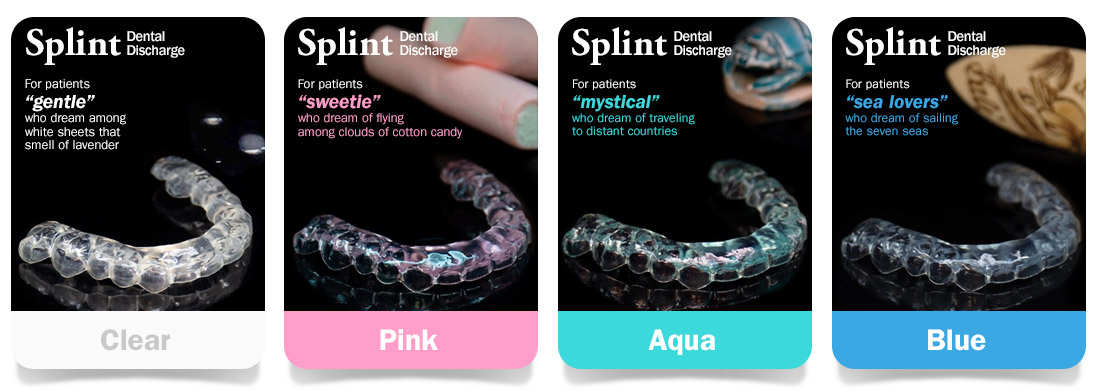
Splint splints are occlusal splints designed using digital workflow technology, allowing the creation of a fully customised splint precisely adapted to the patient’s anatomy and bite.
They are manufactured with exclusive Phibo® resin, free from toxic components and monomers, offering an excellent combination of strength, comfort and durability.
Like Michigan splints, they help protect teeth against dental wear caused by bruxism, stabilise the bite and reduce overload on the temporomandibular joint and jaw muscles.
In addition, we offer different colour options to suit each patient’s preferences.
The choice of splint type will depend on the professional diagnosis and the functional needs of each case.
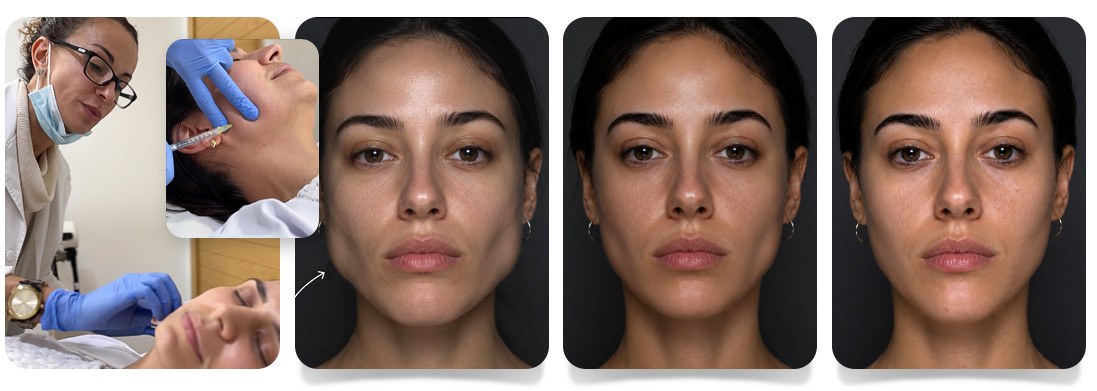
In some patients, the constant effort of clenching the teeth causes hypertrophy of the masseter muscle.
This can create a visually wider, more prominent or more defined jawline, while also increasing facial tension.
In some patients with bruxism, these cases can also be complemented through aesthetic medicine with masseter treatment, helping to reduce excessive muscle strength and progressively soften the lower facial contour.
An approach especially requested at Clínica Áureo by patients seeking a more harmonious and feminine facial contour.
Some common symptoms include dental wear, jaw pain, facial tension, headaches, tooth sensitivity or pressure when waking up.
Yes. Bruxism can cause progressive wear, cracks, fractures and alterations in the natural anatomy of the teeth.
Yes. Muscle tension and jaw overload caused by bruxism can lead to frequent headaches, especially upon waking.
The splint does not eliminate the cause of bruxism, but it helps protect the teeth, stabilise the bite and reduce overload on the muscles and joint.
Michigan splints are custom-made to achieve a comfortable and functional adaptation.
Yes. Masseter muscle hypertrophy can create a visually wider or more prominent jawline.
In some patients, it can help reduce excessive muscle strength, relieve jaw tension and improve the lower facial contour.
At Clínica Áureo, we offer a personalised approach to bruxism and dental wear, combining clinical diagnosis, digital study and treatments adapted to each patient’s needs.
Detecting and treating bruxism early can make a real difference.
Would you like us to assess your case?
Follow us on